
Industrial environments generate massive volumes of data from sensors, machines, and visual systems. The challenge is converting this data into decisions fast enough to improve safety, efficiency, and uptime. Edge AI solves this by performing machine learning inference directly at the source rather than sending every signal to the cloud. This capability is now central to edge AI in manufacturing and to industrial machine vision AI workflows.
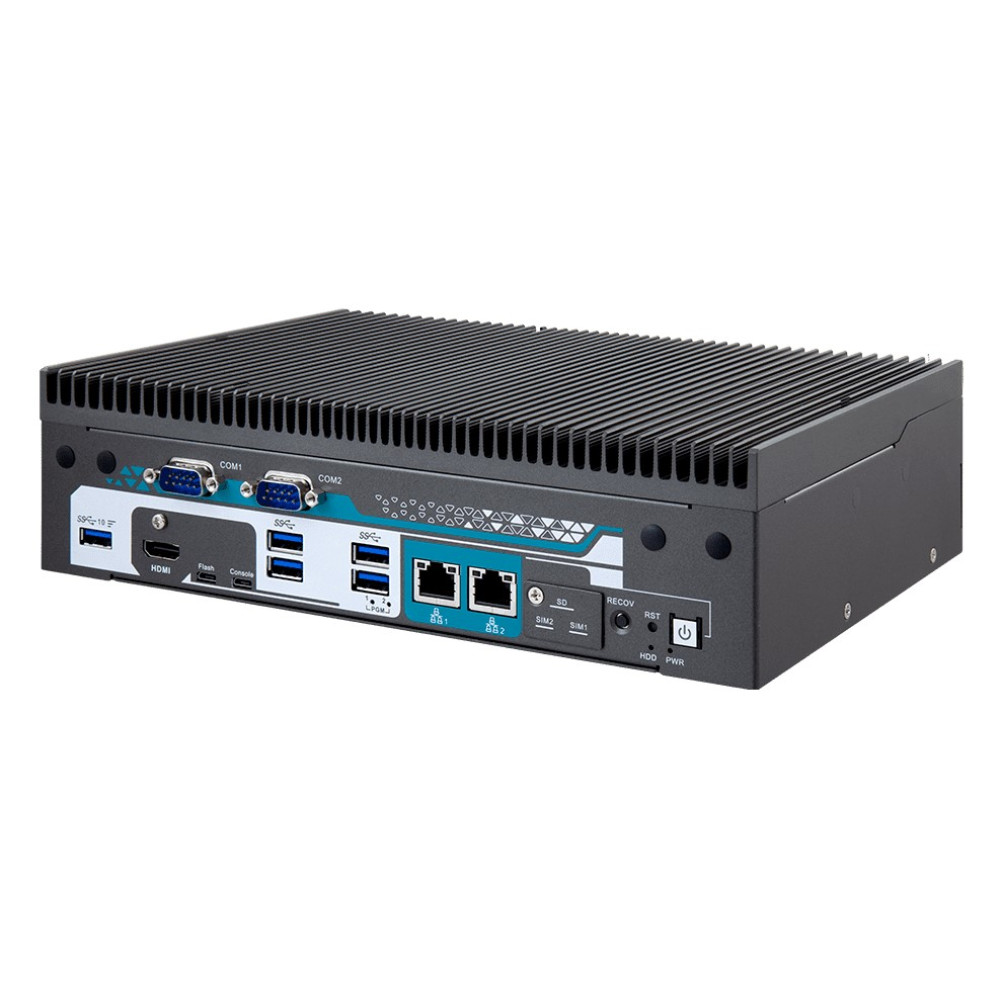
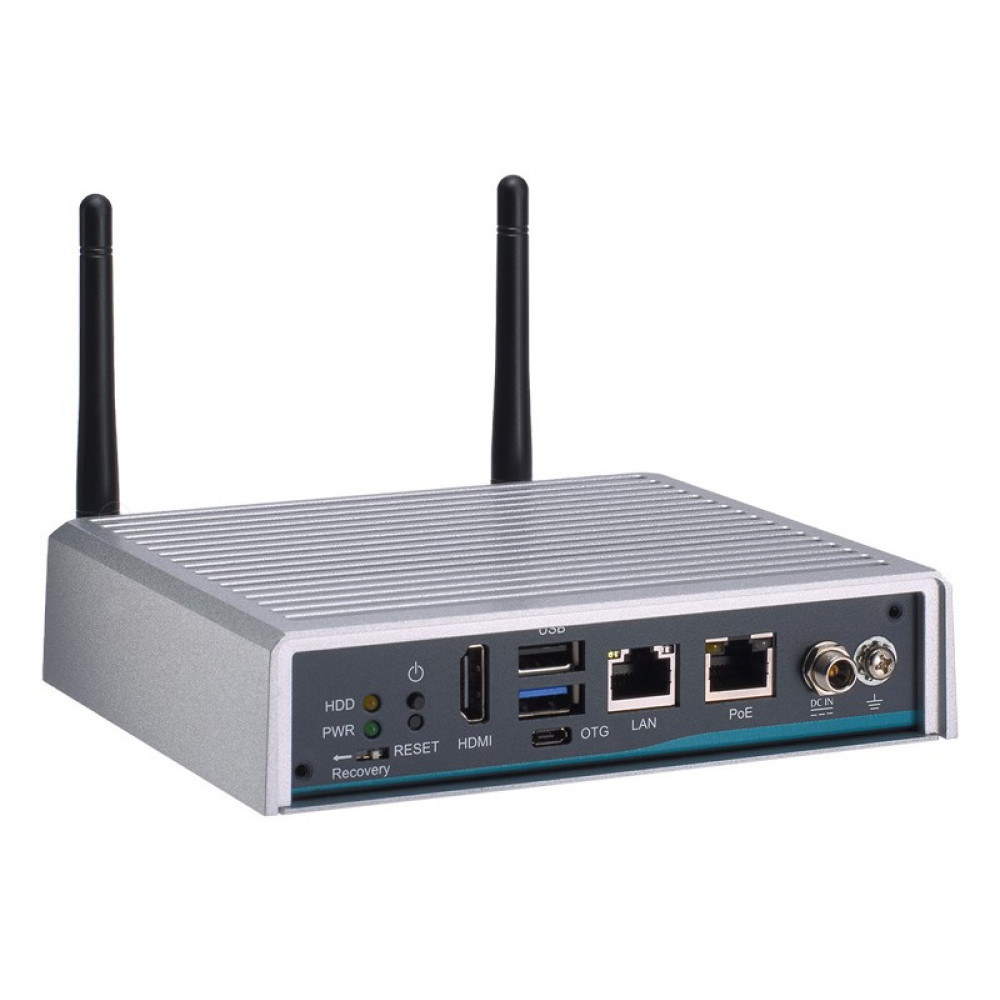
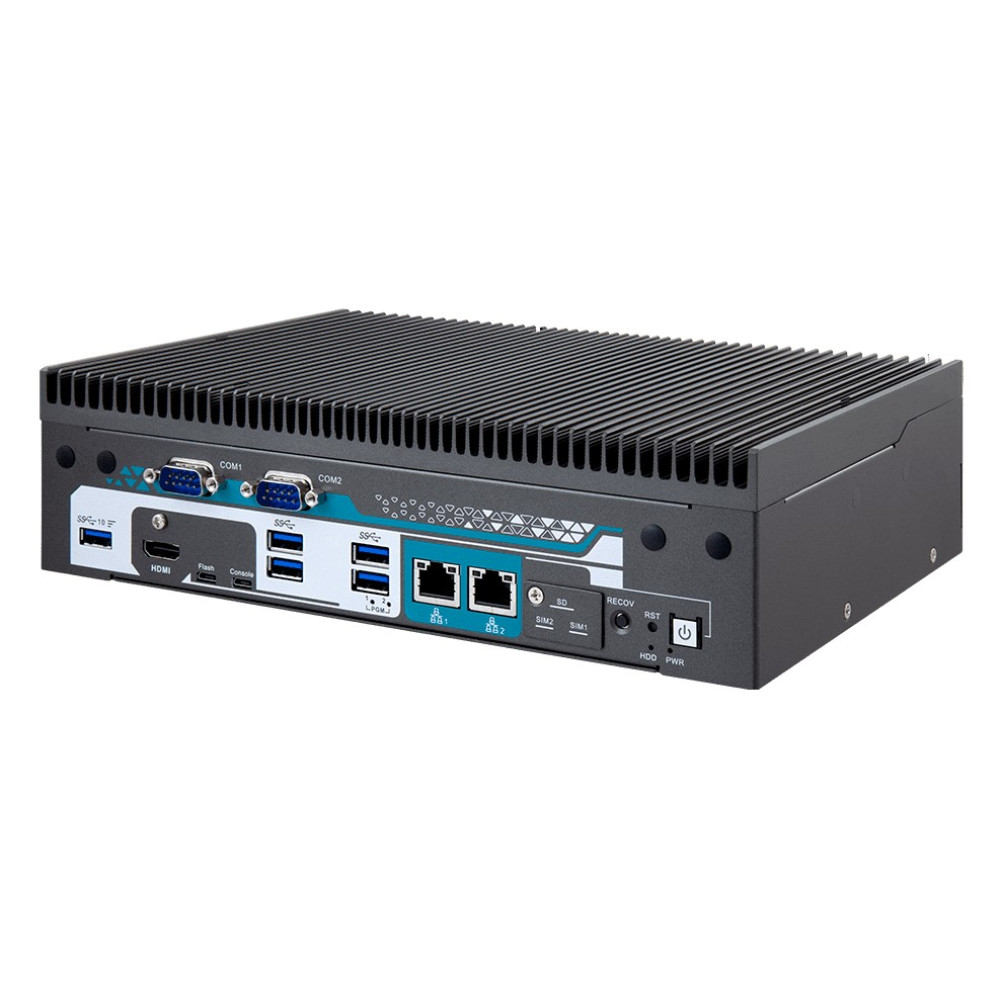
With GPU-powered systems such as the Axiomtek AIE100 ONA, Axiomtek AIE100 ONX, ASUS PE2100N, and ARBOR AEC 6100, organizations can deploy real-time intelligence in harsh, bandwidth-limited, or remote locations. These platforms enable predictive maintenance, automated inspection, and autonomous robotics. For buyers evaluating hardware options, Westward Sales maintains an extensive catalog of edge AI computers for comparison and specification review.
Readers seeking foundational context can begin with the earlier blog on the basics of edge computing before exploring how edge AI enhances automation.
What Edge AI Computing Is and Why It Matters in Industry
Edge AI processes data on local hardware rather than routing it to a remote server. By running inference close to machines and sensors, latency drops from seconds to milliseconds. This improves control decisions, reduces bandwidth demands, and strengthens data privacy.
Industries with high-speed equipment, mission-critical inspection lines, or extreme environmental conditions gain measurable advantages. For example, the Axiomtek AIE100 ONX, built on the NVIDIA Jetson Orin NX module, delivers up to 100 TOPS in a compact, fanless enclosure suitable for factory floors or robotic systems exposed to vibration and temperature fluctuations. Contact Westward Sales today for options and accessory pricing on this rugged, reliable, Fanless Edge AI System.
Edge AI vs. Cloud AI Comparison
| Metric | Edge AI | Cloud AI |
| Latency | Milliseconds with local inference | Seconds due to network travel |
| Bandwidth | Minimal data transfer | Heavy upstream load |
| Security | Data stays on site | Higher exposure through external storage |
| Resilience | Operates offline or with unstable networks | Dependent on reliable connectivity |
This difference is significant for applications where timing, safety, and throughput matter, including industrial machine vision, AI, and real-time robotics control.
Key Benefits of Edge AI for Industrial Automation
1. Real-time processing for faster, safer operations
Edge AI enables immediate interpretation of sensor and camera data. Hardware like the ARBOR AEC 6100, with Jetson AGX Orin performance and support for up to eight GMSL cameras, can run high-throughput visual inspection pipelines without cloud dependencies.
2. Lower operating costs and reduced downtime
Local inference minimizes cloud usage and allows early detection of mechanical issues. Predictive maintenance models can analyze vibration or thermal patterns to prevent unplanned shutdowns and reduce service expenses.
3. Stronger data security and operational resilience
Sensitive production and inspection data remain on site. Even if network connectivity degrades, local AI processing continues uninterrupted.
4. Improved energy efficiency and sustainability
Facilities can optimize machine cycles, airflow, or energy loads based on real-time inputs.
5. Scalable deployments across Industrial Internet of Things (IIoT) networks
Compact platforms like the Axiomtek AIE100 ONA, powered by the NVIDIA Jetson Orin Nano, offer low power consumption, PoE support, and rugged construction. These features allow large-scale deployments across remote and distributed industrial environments.
Core Applications in Industrial Automation
Edge AI has become foundational across several high-value applications in modern industrial automation.
Predictive Maintenance
Equipment failure in mission-critical environments leads to costly downtime. Edge AI models trained on vibration, temperature, and acoustic profiles can detect abnormal patterns far earlier than traditional thresholds.
The Axiomtek AIE100 ONX effectively supports this use case. It ingests sensor data, performs anomaly detection on the device, and provides real-time alerts that allow maintenance teams to intervene before a failure. Its rugged housing and PoE support make it suitable for direct mounting near machinery.
Predictive workflows typically follow a straightforward pipeline:
- Sensors collect operational data.
- Edge AI evaluates the data locally.
- Alerts or automated adjustments are triggered.
- Maintenance teams receive actionable insights.
For organizations that also develop custom AI models or training pipelines, Westward Sales offers high-performance GPU workstations for model development and validation.
Visual Inspection and Machine Vision
Machine vision is a leading driver of edge AI adoption. Industrial machine vision AI systems capture defects, alignment errors, and assembly deviations that human inspectors cannot consistently identify at production speeds.
The ARBOR AEC 6100 is an ideal example. It supports eight GMSL camera inputs, isolated I/O, and wide temperature operation, making it suitable for continuous inspection on lines where accuracy and reliability matter.
Everyday inspection tasks include:
- Identifying surface defects
- Checking component alignment
- Verifying packaging and labeling
- Inline optical character recognition
Real-time inspection of this type requires edge inference due to bandwidth limits and safety constraints.
Real-time Automation and Robotics
Autonomous mobile robots, cobots, and adaptive conveyors depend on fast perception and control. High-performance edge AI systems interpret visual and sensor data to support navigation, safety monitoring, and dynamic response.
The ASUS PE2100N, built on NVIDIA Jetson AGX Orin, provides up to 275 TOPS of compute along with 10 GbE networking and multiple PoE ports. This makes it suitable for robotic navigation, pick-and-place systems, and high-throughput control loops.
Teams building integrated automation stacks often combine perception nodes with supervisory hardware, such as industrial computers, to handle process coordination, data routing, and integration with MES or SCADA systems.
Challenges and Practical Solutions
Hardware limitations and optimization needs
Edge devices must operate within defined thermal and power constraints. Efficient systems like the Axiomtek AIE100 ONA provide an effective platform for lightweight but accurate inference models.
Integration with legacy industrial equipment
Older systems often rely on protocols such as RS-232, CAN bus, or discrete I/O. Westward Sales offers hardware solutions, such as the ASUS PE2100N, which includes extensive connectivity to bridge new AI-driven systems with existing infrastructure.
Security and compliance concerns
Keeping data local reduces risk exposure. Edge devices combined with network segmentation and secure boot capabilities help meet industrial security expectations.
To explore hardened platforms designed for demanding environments, see Westward Sales’ portfolio of rugged systems.
Real World Examples
Automotive and high-precision manufacturing
Real-time inspection tunnels use multi-camera vision systems to identify minute surface defects. Systems similar to the ARBOR AEC 6100 enable high-throughput inspection with consistent accuracy.
Energy and utilities
Remote compressor sites and substations rely on compact nodes for local AI inference when connectivity is limited. The Axiomtek AIE100 ONA provides suitable power efficiency and ruggedization for these deployments.
Warehousing and robotics
Autonomous agents depend on edge AI for navigation and object detection. Platforms like the Axiomtek AIE100 ONX supply the performance needed for SLAM, obstacle detection, and dynamic routing.
For readers deploying GPU-accelerated systems, Westward Sales maintains a full NVIDIA Jetson systems catalog for system-level comparison.
Looking Ahead: Future Direction of Edge AI Computing in Industry
Industrial edge AI continues to advance through more efficient model architectures, more capable GPUs, and tighter integration between robotics, sensing, and control. Key trends include improvements in sensor fusion, lightweight transformer models optimized for embedded inference, and broader adoption of AI-enhanced inspection and maintenance.
These changes support a shift toward more autonomous, resilient plant operations where decisions are made locally and efficiently.
External industry insights are available from sources such as IEEE Spectrum’s analysis of edge AI and McKinsey’s report on AI performance in industrial processing plants, both of which highlight the trend toward local, real-time intelligence in industrial operations.
Frequently Asked Questions
Edge AI in industrial automation refers to running machine learning inference on local hardware installed near machines, sensors, and production lines. This removes dependency on cloud networks and enables real-time decisions for inspection, control, and predictive maintenance.
Edge AI analyzes vibration, temperature, acoustic, and operational data on-site. By detecting anomalies early, it alerts operators before a failure occurs. This leads to fewer unplanned shutdowns and extends equipment lifespan.
Machine vision requires fast image processing with minimal latency. Edge AI analyzes camera feeds locally, avoiding network latency. This improves accuracy in defect detection, alignment checks, and high-speed inspection tasks.
Edge AI deployments often use rugged systems built on NVIDIA Jetson modules. Platforms such as Orin Nano, Orin NX, and AGX Orin provide the performance needed for real-time inference while maintaining low power consumption and support for industrial I/O.
Yes. Edge AI runs inference locally, so it continues functioning even when network connectivity is limited. This is valuable in remote sites, energy infrastructure, warehouses, and facilities with variable network quality.
Manufacturing, logistics, energy, utilities, transportation, and food processing gain significant value. These environments depend on accurate inspection, reliable automation, and timely maintenance decisions. Edge AI improves throughput, safety, and control across sectors.
Selection depends on environmental conditions, I/O requirements, and model complexity. Entry-level systems like Orin Nano support light inference, while mid-range Orin NX and high-end AGX Orin platforms handle multi-sensor fusion, robotics, and demanding machine vision workloads. Consider thermal range, vibration resistance, PoE support, and available interfaces.
Equip Your Facility for Real-time AI
Edge AI enables faster decisions, improved inspection accuracy, and reliable predictive maintenance. Selecting hardware designed for industrial environments is essential for long-term success.
Explore solutions such as the Axiomtek AIE100 ONA, Axiomtek AIE100 ONX, ASUS PE2100N, and ARBOR AEC 6100, or browse Westward Sales’ full range of embedded computers to identify the right system for your automation program.
Westward Sales is the expert in industrial edge computing and can guide your organization in selecting reliable AI systems for real-time performance. We supply rugged, high-capability platforms built for automation, machine vision, and IIoT workloads. Be sure to browse our catalog or contact our team to identify the systems that best support your operational goals.

Leave a Reply