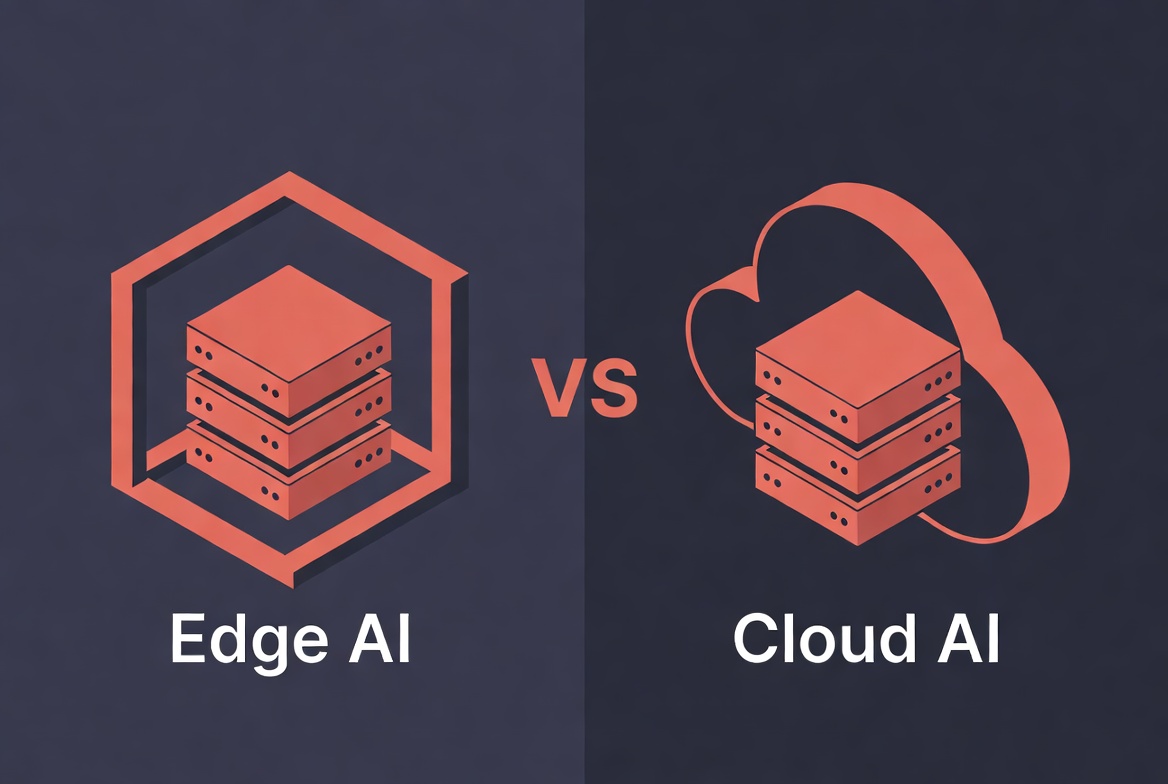

Industrial environments generate massive volumes of data from sensors, cameras, and control systems. The challenge is converting this data into decisions fast enough to improve safety, efficiency, and uptime.
Cloud AI offers virtually unlimited compute resources and simplifies model training at scale. Edge AI delivers speed and autonomy. Understanding when each approach makes sense enables systems that leverage both.
Readers seeking foundational context can begin with the earlier blog on the basics of edge computing before exploring edge vs cloud trade-offs.
What Separates Edge AI from Cloud AI
Cloud AI processes data in centralized data centers. Raw sensor readings, video feeds, and equipment telemetry travel across networks to reach GPU clusters, where AI models analyze the information and return results.
Edge AI moves that processing directly onto devices deployed near data sources. Industrial computers equipped with GPU acceleration run inference locally, analyzing sensor data and making decisions without requiring a network round-trip.
The distinction matters because industrial environments impose constraints that consumer IT rarely encounters. Industrial environments also impose physical and environmental demands that standard hardware cannot meet. Equipment must withstand wide temperature swings, vibration, shock, and electrical noise, conditions that consumer-grade computers are not rated or tested for. This distinction becomes a key factor when selecting edge hardware for deployment outside a controlled server room. Production lines operate at speeds measured in parts per second. Safety systems must respond in milliseconds. Equipment in remote locations may have intermittent connectivity.
Edge AI vs Cloud AI Comparison
| Metric | Edge AI | Cloud AI |
| Latency | Milliseconds with local inference | Seconds due to network travel |
| Bandwidth | Minimal data transfer | Heavy upstream load |
| Security | Data stays on site | Higher exposure through external storage |
| Resilience | Operates offline or with unstable networks | Dependent on reliable connectivity |
| Scalability | Add devices incrementally | Scale through cloud resources |
For buyers evaluating hardware, Westward Sales maintains an extensive catalog of edge AI computers and embedded edge computers for specification review.
Latency: The Difference Between Detection and Prevention
Network latency creates a hard constraint on cloud AI response times. Data must travel from the source device to a data center, be processed, and then return. Research found that only 29% of end users could reach cloud locations in under 10 milliseconds, compared to 58% reaching nearby edge servers in the same window.
For industrial automation, those milliseconds translate directly to outcomes.
A high-speed packaging line running at 30 units per second needs defect detection that keeps pace. One second of processing delay means 30 potentially defective products continue down the line. Quality inspection, predictive maintenance alerts, and safety shutdowns all depend on response times that cloud architectures struggle to guarantee.
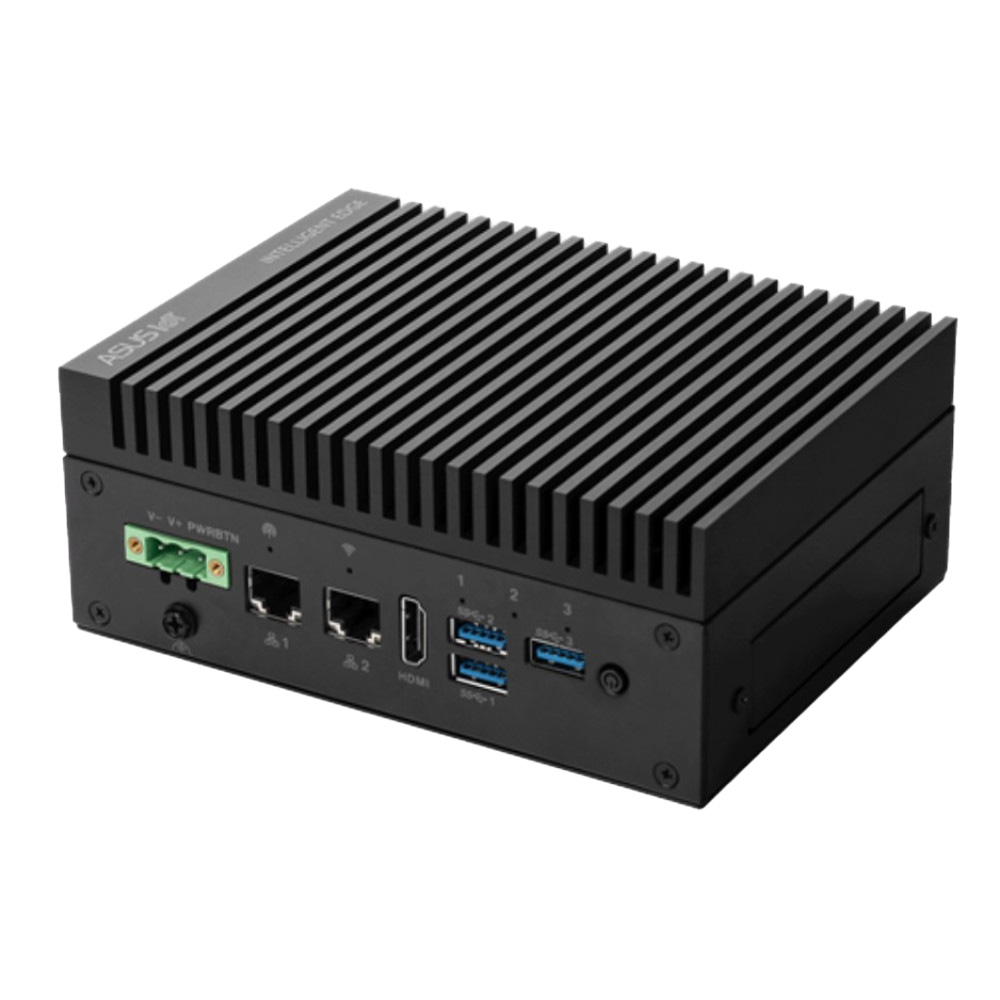
Edge AI platforms built around NVIDIA Jetson modules deliver inference at the point of data collection. A fanless system like the ASUS PE1100N running an Orin NX processor provides up to 100 TOPS of compute directly at the machine. The data never leaves the facility, and analysis happens in real time.
Bandwidth: Why Sending Everything to the Cloud Breaks Down
Industrial sensors and cameras generate substantial data volumes. A single 4K camera at 30 frames per second produces roughly 1.5 Gbps of uncompressed video. Multiply that across dozens of cameras, and bandwidth requirements quickly exceed what most facilities can transmit.
Cloud AI architectures assume this data can reach remote processing centers. The assumption fails in several scenarios:
- Manufacturing facilities in rural areas may lack adequate connectivity
- Oil and gas operations often rely on satellite links with limited capacity
- Even well-connected facilities face congestion when multiple systems compete for bandwidth
Edge AI addresses these constraints by processing data at the source and transmitting only results. Instead of streaming raw video to the cloud, an edge device extracts defect classifications, part counts, and quality metrics locally.
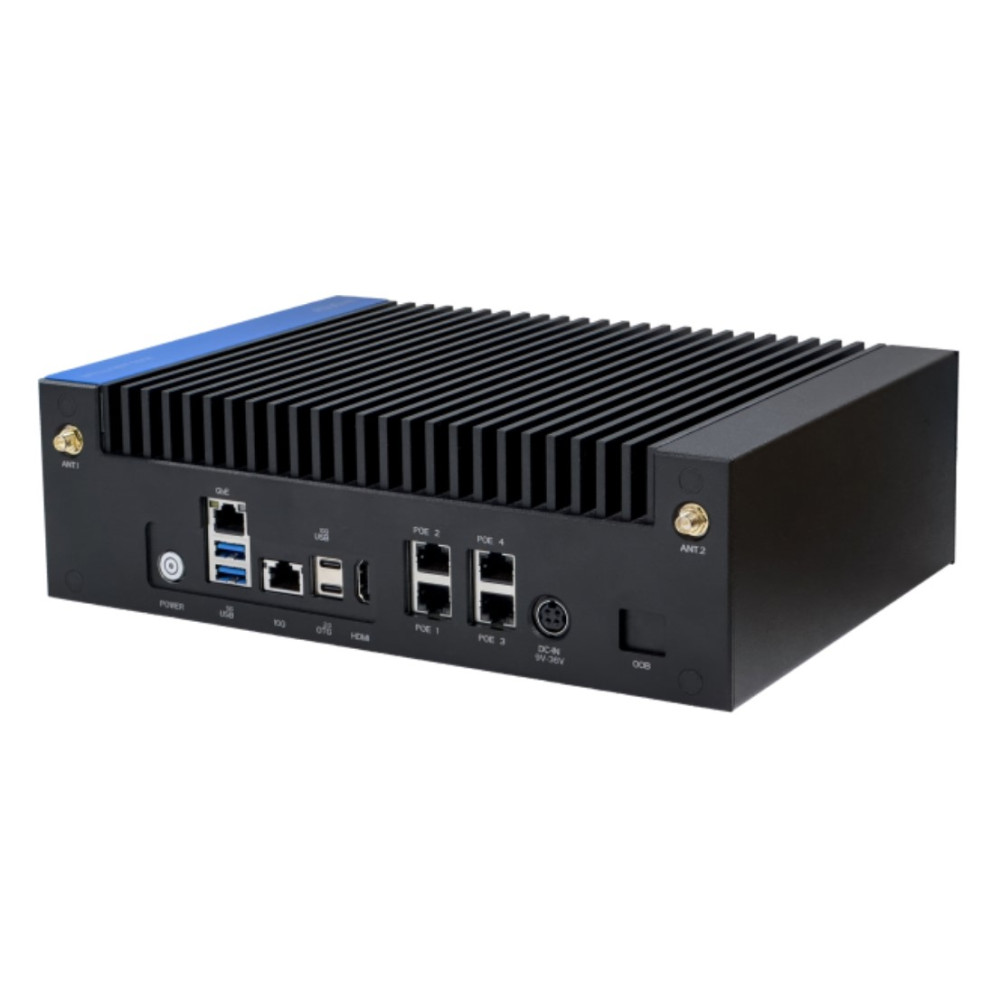
For multi-camera deployments, platforms like the ASUS PE2100N include quad PoE ports and 10 GbE connectivity designed to aggregate high-bandwidth video locally. The system processes up to 275 TOPS on-site, eliminating the need to push raw feeds across the network.
Data Privacy and Security: Keeping Sensitive Information Local
Transmitting operational data to third-party cloud services introduces a risk that many industries cannot accept.
Healthcare facilities must comply with data sovereignty requirements. Financial services face regulatory constraints on data transit. Manufacturing companies consider production data competitive intelligence that should never leave their network perimeter.
Edge AI stores sensitive data on-premises. Visual inspection systems can analyze product quality without uploading images containing proprietary designs. Predictive maintenance models can monitor equipment health using data that stays within the plant’s security boundary.
This architecture also reduces the attack surface. Edge AI systems sit behind existing plant security infrastructure, processing data without exposing it to the public internet.
Industry Scenarios: Where Edge AI Delivers Results
Understanding abstract trade-offs is one thing. Seeing how they apply to specific industries clarifies the decision.
Manufacturing and Quality Control
Automated inspection tunnels use multi-camera vision systems to identify surface defects at production speeds. Systems built on platforms like the Axiomtek AIE100-ONX enable high-throughput inspection with consistent accuracy. The edge handles real-time detection while the cloud stores historical data for trend analysis.
Energy and Utilities
Remote compressor sites and substations rely on compact edge nodes for local AI inference when connectivity is limited. Ruggedized platforms from the rugged systems category perform well in harsh, remote environments.
Logistics and Warehousing
Autonomous mobile robots depend on edge AI for navigation and obstacle detection. Perception must happen locally because network latency would make real-time navigation impossible. The Axiomtek AIE810-ONX provides IP67-rated protection for demanding warehouse conditions.
Transportation and Traffic Management
Intersection monitoring and vehicle classification require immediate analysis. Edge devices process video feeds locally, sending only aggregated metrics upstream for city-wide coordination.
Robotics and Autonomous Systems
Robotics is among the highest-demand applications for edge AI. Autonomous machines cannot tolerate the round-trip latency of cloud processing — every navigation decision, obstacle detection, and path correction must happen locally and in real time.
This requirement spans a wide range of platforms. Autonomous mobile robots in warehouses depend on edge AI for safe navigation through dynamic environments. Agricultural sprayers use onboard vision systems to identify crops and apply treatments with precision. Automated outdoor equipment, such as robotic lawn mowers and sweepers process terrain data without relying on continuous connectivity. Underwater submersibles and remotely operated vehicles require local inference when network links are unreliable or unavailable.
Across all of these platforms, the common requirement is an edge computer that delivers AI performance under real-world environmental conditions, is compact and rugged, and can sustain inference at the point of operation.
When Cloud AI Still Makes Sense
Edge AI excels at real-time inference but has limitations.
Training complex deep learning models requires compute resources that exceed what edge devices can provide. Edge devices handle inference efficiently, while the cloud provides infrastructure for model development.
Cloud AI also offers advantages where latency tolerance exists and aggregate analysis matters:
- Fleet-wide analytics combining data from hundreds of facilities
- Long-term trend analysis drawing on months of historical data
- AI model updates pushed across distributed edge devices
The practical answer for most deployments involves hybrid architectures. Edge devices handle time-critical inference. Cloud systems manage model training and historical analytics. Each layer processes what it handles best.
Selecting Edge Hardware for Industrial AI Workloads
Not all edge devices can deliver industrial AI performance. Consumer hardware lacks environmental ratings, I/O flexibility, and long-term availability.
Temperature range matters in facilities without climate control. Fanless systems operate reliably across wide temperature spans without moving parts that can fail.
Environmental protection becomes critical for outdoor installations. Traffic monitoring and remote asset monitoring place edge devices in conditions that would destroy consumer electronics.
I/O requirements vary by application. Vision systems need PoE ports. Robotics may require CAN bus interfaces. Legacy equipment often demands serial ports.
For a full comparison, browse the edge AI computers catalog or explore embedded computers for gateway applications.
Frequently Asked Questions
Edge AI processes data locally on devices near the data source. Cloud AI sends data to remote data centers for processing. This difference affects latency, bandwidth usage, security, and reliability.
Use edge AI when latency directly affects safety, quality, or throughput. High-speed inspection, predictive maintenance alerts, and applications in bandwidth-constrained or remote locations all benefit from local processing.
Yes. Edge AI runs inference locally, so it continues functioning even when network connectivity is limited. This is valuable in remote sites, energy infrastructure, and facilities with variable network quality.
Not usually. Most organizations adopt a hybrid approach. The edge handles real-time decisions, and the cloud manages long-term analytics, model training, and cross-facility coordination.
Rugged embedded computers built on NVIDIA Jetson modules are common. Platforms like Orin Nano, Orin NX, and AGX Orin deliver real-time inference performance while supporting industrial I/O, wide temperature ranges, and fanless operation.
Selection depends on environmental conditions, I/O requirements, and model complexity. Consider thermal range, vibration resistance, PoE support, and available interfaces when matching hardware to your application.
Building the Right Architecture for Your Deployment
The edge vs cloud question rarely has a single answer. Time-critical applications benefit from edge inference. Aggregate analytics may work better in the cloud. The goal is matching processing location to each use case.
Start by mapping latency requirements. Any application where response time directly affects safety, quality, or throughput deserves edge processing. Evaluate bandwidth constraints honestly. Consider data sensitivity and regulatory requirements.
Westward Sales is the expert in industrial edge computing. Browse our catalog of edge AI computers and embedded edge computers, or contact our team to identify systems that support your operational goals.
Related Reading:

Leave a Reply