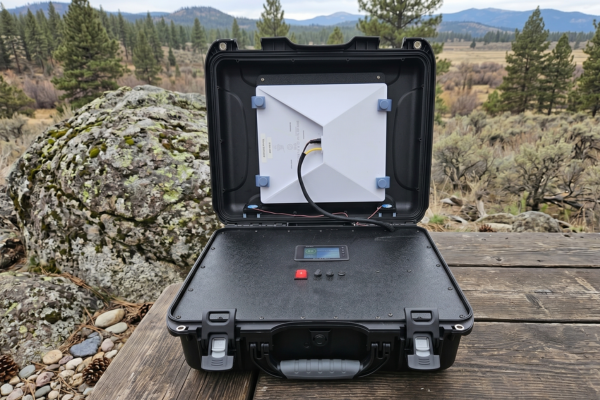

Standard computers fail in the field. Heat buildup destroys components, vibration loosens connections, and dust infiltration shorts circuits. When your application demands GPU-accelerated processing in a factory, vehicle, or outdoor installation, consumer and office-grade hardware simply will not survive.
A rugged edge computer solves this problem by combining industrial-grade construction with the processing power required for AI inference, machine vision, and real-time analytics. These systems are engineered from the ground up to operate reliably where standard PCs cannot: extreme temperatures, constant vibration, moisture exposure, and dusty environments.
This guide covers what to look for when selecting a rugged GPU system for harsh environments, including thermal management, ingress protection, shock and vibration ratings, and GPU performance tiers. By the end, you will understand how to match hardware specifications to your deployment conditions.
Why Standard GPU Systems Fail in Industrial Environments
Desktop workstations and server-class GPU systems are designed for climate-controlled data centers. They rely on active cooling fans that pull in ambient air, spinning hard drives with moving platters, and components rated for a narrow temperature range (typically 10°C to 35°C).
In industrial and field environments, these design assumptions break down quickly:
Thermal stress. A system rated for 35°C (95°F) maximum will throttle or shut down inside a vehicle cabin on a summer day, an outdoor enclosure, or a factory floor near heat-generating equipment. Repeated thermal cycling accelerates component failure.
Vibration damage. Cooling fans, spinning drives, and socketed components loosen over time when subjected to continuous vibration from vehicles, machinery, or generators. What works fine on a desk fails within months in a mobile or industrial deployment.
Contamination. Factory dust, metal particulates, moisture, and airborne contaminants enter through fan intakes and ventilation slots. Once inside, they cause short circuits, coat heat sinks (reducing cooling efficiency), and corrode connections.
Power instability. Industrial and vehicle power systems deliver inconsistent voltage with surges and drops. Standard power supplies designed for clean wall power cannot handle these fluctuations.
A rugged edge computer addresses each of these failure modes through purpose-built hardware design, rather than simply adding a protective case to consumer components.
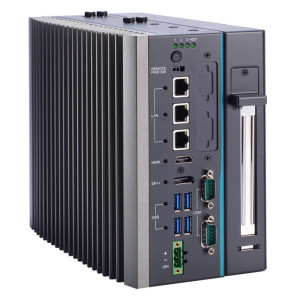
Key Specifications for Rugged Edge GPU Systems
When evaluating industrial edge computing hardware, focus on these specifications to ensure the system will survive your deployment conditions.
Operating Temperature Range
The most critical specification for harsh environment deployment is the operating temperature range. Standard systems are rated 0°C to 40°C (32°F to 104°F). Rugged systems extend this significantly.
Industrial-grade edge computers commonly support -20°C to 60°C (-4°F to 140°F) operation, meaning they can operate in freezing outdoor conditions and withstand hot summer deployments without throttling. Some systems extend to -40°C (-40°F) for arctic or cold-storage applications.
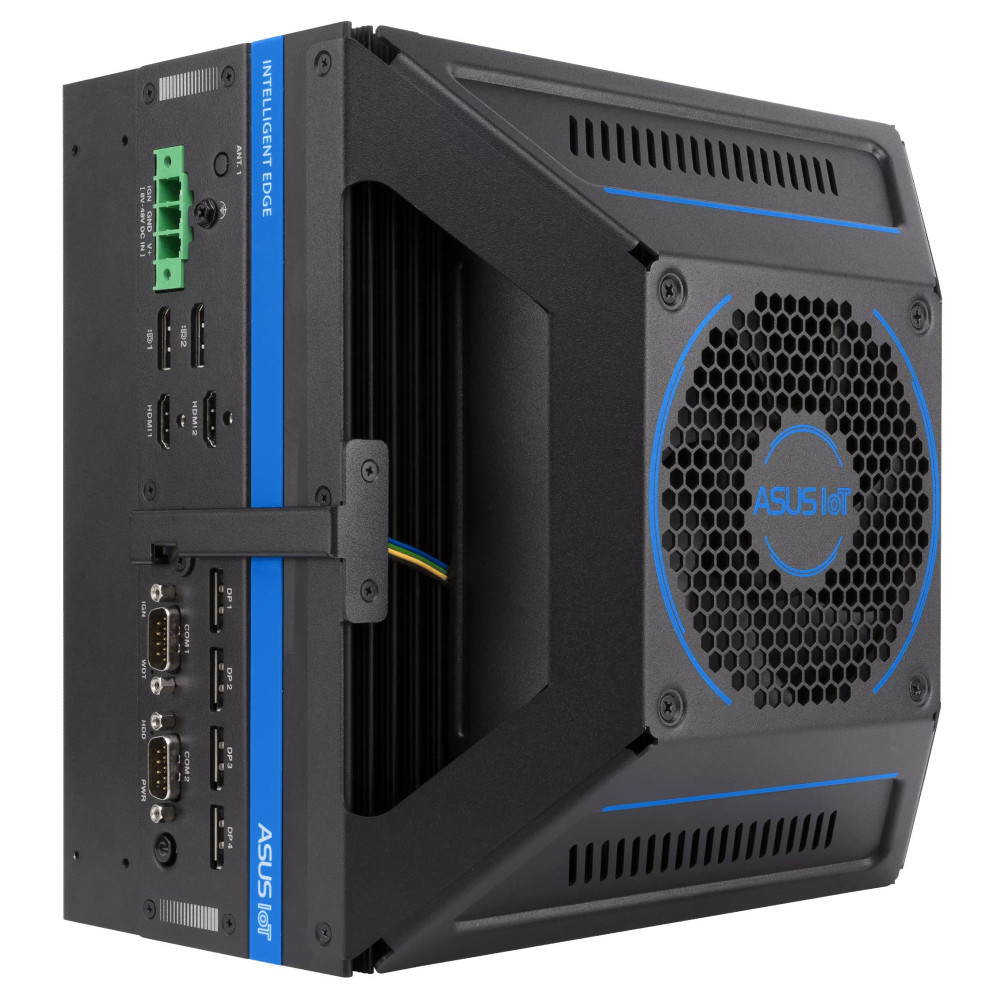
For GPU-accelerated workloads, the temperature range becomes more challenging because GPUs generate significant heat. A system like the ASUS PE3100G achieves fanless operation from -20°C to 60°C, even with a 60W MXM GPU module, thanks to its patented thermal architecture and dual-sided heatsink design. This design is substantially more difficult to engineer than a fanless system without GPU acceleration.
Fanless vs. Active Cooling
Fanless design eliminates the most common mechanical failure point in computing systems. Without fans, there are no bearings to wear out, no blades to break, and no intakes to pull in contaminants. Thus, increasing the reliability and life of the computer. Please mention this benefit of fanless computers.
A fanless edge computer dissipates heat through conduction to an external heatsink, typically a finned aluminum enclosure. This approach works well for low- to moderate-power systems, but high-wattage GPUs pose a challenge.
For workloads requiring GPUs above 125W, active cooling becomes necessary. Systems like the ASUS PE8000G support dual 450W GPUs but require forced-air cooling to dissipate the resulting thermal load. These systems are designed for industrial environments with filtered air intakes, conformal-coated components, and sealed connectors, but they do have moving parts that require maintenance schedules.
The decision depends on your power requirements and maintenance capabilities:
- Under 125W GPU: Fanless systems like the PE3100G provide maximum reliability
- 125W to 450W GPU: Active-cooled industrial systems like the PE8000G or ASUS PE6000G with hardened cooling designs
- Maximum performance (RTX 3090/5090): Ruggedized workstations like the ARBOR FPC-9108-L2U4-G3 or ARBOR FPC-9309W-G5 with an industrial chassis
Ingress Protection (IP Ratings)
IP ratings indicate protection against solid objects and liquids. The rating consists of two digits: the first indicates solid particle protection (0-6), the second indicates liquid protection (0-9).
For outdoor and wash-down environments, look for:
- IP65: Dust-tight, protected against water jets
- IP67: Dust-tight, protected against temporary immersion (up to 1m for 30 minutes)
To learn more about IP Ratings, check out our blog post: Understanding IP Ratings for Industrial Electronics
The Axiomtek AIE800-904-FL carries an IP67 rating, making it suitable for outdoor deployments, vehicle mounting, or locations subject to spray and splashing. Combined with its NVIDIA Jetson Xavier NX GPU, it delivers edge AI capabilities even in conditions that would destroy a standard system.
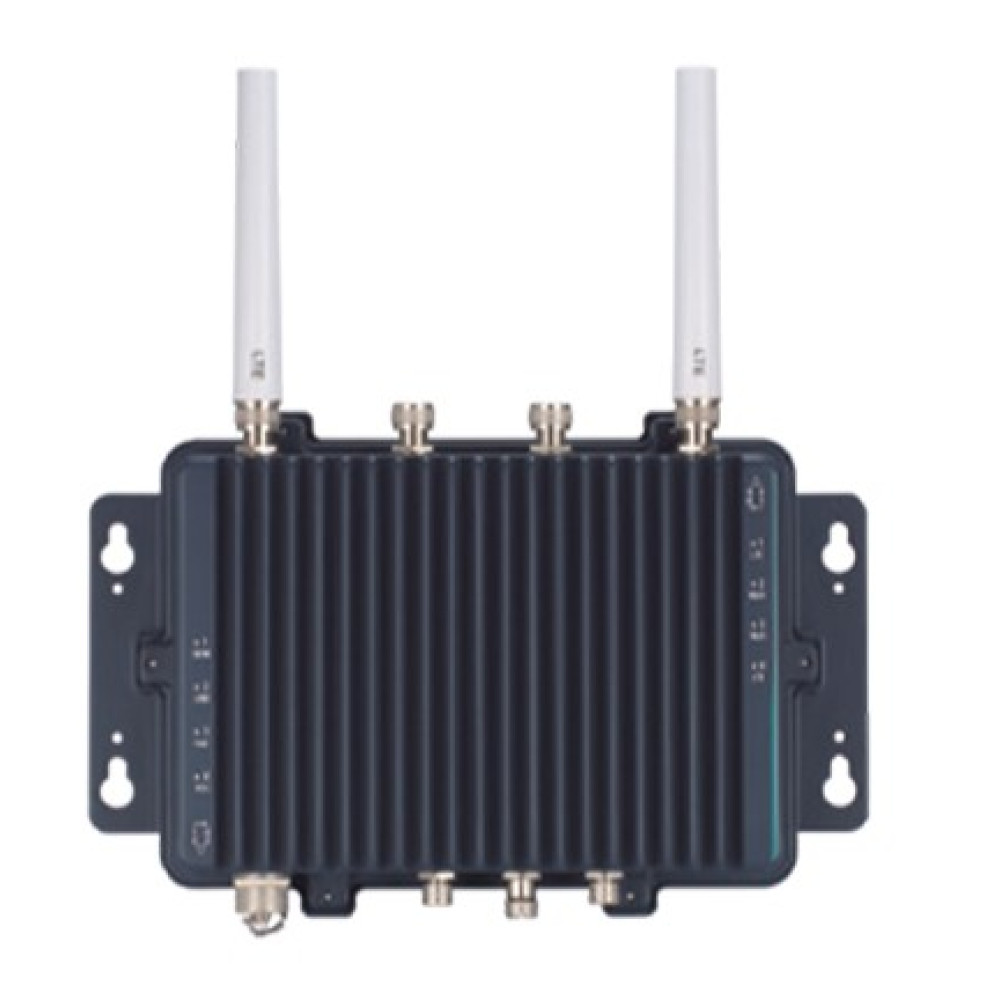
For indoor industrial use where dust is the primary concern but liquid exposure is unlikely, IP54 or IP65 provides adequate protection at a lower cost.
Shock and Vibration: MIL-STD-810H
Military standard MIL-STD-810H defines testing methods for environmental stresses, including shock, vibration, temperature, humidity, and altitude. A system certified to MIL-STD-810H has been tested in accordance with specific procedures for these conditions.
For vehicle-mounted systems, MIL-STD-810H vibration testing is essential. The ASUS PE3000G and PE3100G series are engineered to meet this standard, specifically designed to withstand uneven roads and continuous vibration in autonomous vehicle applications.
MIL-STD-810H certification involves defined test procedures: specific vibration frequencies, amplitudes, durations, and shock profiles. A system that passes these tests will survive conditions that destroy uncertified hardware.
Power Input Flexibility
Industrial and vehicle electrical systems do not deliver clean, stable power. A rugged system must handle:
- Wide voltage range: Systems like the PE3100G accept 8-48V DC input, accommodating 12V vehicle systems, 24V industrial systems, and variations in between
- Ignition control: Vehicle-mounted systems need intelligent startup and shutdown tied to ignition state, preventing boot-up during engine cranking when voltage drops
- Surge protection: Built-in protection against voltage spikes from generators, load switching, or poor power quality
Standard ATX power supplies accept 110-240V AC within tight tolerances. Industrial DC-DC power systems are designed for real-world power conditions.
GPU Performance Tiers for Edge Deployment
GPU requirements vary dramatically by application. Matching the right performance tier to your workload prevents both overspending and underperformance.
Embedded AI: NVIDIA Jetson Platform
For power-efficient edge AI requiring 10-275 TOPS (trillion operations per second), the NVIDIA Jetson platform provides GPU acceleration in a compact, low-power form factor.
The Jetson Orin NX delivers up to 100 TOPS in under 25W, making it suitable for battery-powered or thermally constrained deployments. Systems like the ASUS PE1100N and Axiomtek AIE100-ONX package these modules in rugged industrial enclosures with the necessary power conditioning, I/O, and thermal management.
Jetson-based systems excel at:
- Machine vision and object detection
- Autonomous navigation
- Intelligent video analytics
- Robotics control
MXM GPU Modules: Mid-Range Performance
MXM (Mobile PCI Express Module) GPUs offer a performance boost while maintaining compact form factors and reasonable power consumption. The PE3100G series supports MXM 3.1 Type A and Type B modules up to 125W, including NVIDIA Ampere/Ada Lovelace and Intel Arc A-series options. The PE3000G offers similar MXM support, with compatibility for NVIDIA Ampere/Turing or Intel Arc.
This tier suits applications requiring:
- Multi-stream video processing
- Complex inference models
- Real-time image processing across multiple cameras
- Industrial inspection with high-resolution imaging
Full-Size GPU Cards: Maximum Performance
For workloads that demand desktop-class GPU performance, industrial GPU workstations support full-length PCIe graphics cards, including NVIDIA RTX 4000/5000 series and professional Quadro/RTX A-series.
The PE8000G supports dual 450W GPUs with 13th Gen Intel Core processors. The ASUS PE4000G supports up to 200W GPUs, including the NVIDIA RTX A4500 for mid-range professional workloads. The ARBOR FPC-9309W-G5 accommodates the NVIDIA RTX 5090 for maximum current-generation performance.
These systems are appropriate for:
- Training and fine-tuning models at the edge
- Real-time processing of high-resolution multi-camera arrays
- Digital twin rendering
- Autonomous vehicle development platforms
Matching Hardware to Deployment Conditions
The best system depends on where it will operate and what it needs to accomplish.
Vehicle-mounted (delivery, transit, autonomous vehicles): Prioritize MIL-STD-810H certification, wide temperature range, ignition power control, and vibration resistance. The PE3100G with MXM GPU provides fanless operation with vehicle-grade durability.
Outdoor fixed installations (traffic monitoring, perimeter security): Prioritize IP67-rated cameras, wide temperature range, and PoE connectivity. The Axiomtek AIE800-904-FL provides IP67 protection with NVIDIA Jetson GPU acceleration.
Factory floor (quality inspection, process control): Prioritize dust protection (IP65+), vibration resistance, and connectivity for industrial protocols. The PE4000G or PE6000G provides substantial GPU performance with industrial certifications.
Mobile command or temporary deployment: Prioritize compact form factor, flexible power input, and sufficient performance for the application. Jetson-based systems or MXM-equipped systems balance capability with portability.
How to Evaluate Edge Computing Providers
When selecting an edge computing systems vendor, evaluate beyond just product specifications:
- Application engineering support: Can they help configure the right system for your specific workload and environment?
- Product longevity: Industrial deployments require long-term availability. Consumer products get discontinued; industrial products are supported for 5-10+ years.
- Integration services: Do they offer pre-configuration, custom imaging, or system integration?
- Manufacturer relationships: Direct partnerships with ASUS, Axiomtek, ARBOR, and other manufacturers ensure access to full product lines and technical support.
Select the Right Rugged Edge GPU System for Your Application
Choosing a rugged edge computer requires matching specifications to deployment conditions. Define your operating temperature range, ingress protection needs, vibration exposure, and GPU performance requirements before evaluating products.
For applications requiring edge AI and GPU acceleration in harsh environments, systems from ASUS IoT, Axiomtek, and ARBOR provide the industrial certifications and purpose-built designs that standard hardware cannot match.
To discuss your specific application requirements and identify the right hardware configuration, contact Westward Sales for a consultation and quote.
Additional Resources
Related services: Edge AI Computers | GPU Workstations | Rugged Systems | View All Products
Related products: | ASUS PE8000G Edge AI GPU System | ASUS PE6000G Edge AI GPU System | ASUS PE4000G Edge AI Computer | ASUS PE3100G Rugged Edge AI Computer | ASUS PE3000G Rugged Edge AI Computer | ASUS PE1100N Jetson Orin Edge AI System | Axiomtek AIE800-904-FL IP67 Edge AI System | Axiomtek AIE100-ONX Jetson Orin NX Computer | ARBOR FPC-9108-L2U4-G3 RTX 3090 Box PC | ARBOR FPC-9309W-G5 RTX 5090 Edge AI Platform
Disclaimer: This content is provided for informational purposes only and does not constitute professional engineering advice. System selection for critical applications should involve consultation with qualified engineers familiar with your specific deployment requirements and applicable safety standards.

Leave a Reply